Crawl Space Radon Mitigation in Lafayette, CO
No slab to drill through? Crawl space homes need a sealed vapor barrier and a fan, not a concrete system. We handle the whole job, start to finish.
Get Your Free On-Site Quote
One of the owners will get back to you.
Why Crawl Space Radon Mitigation Works Differently
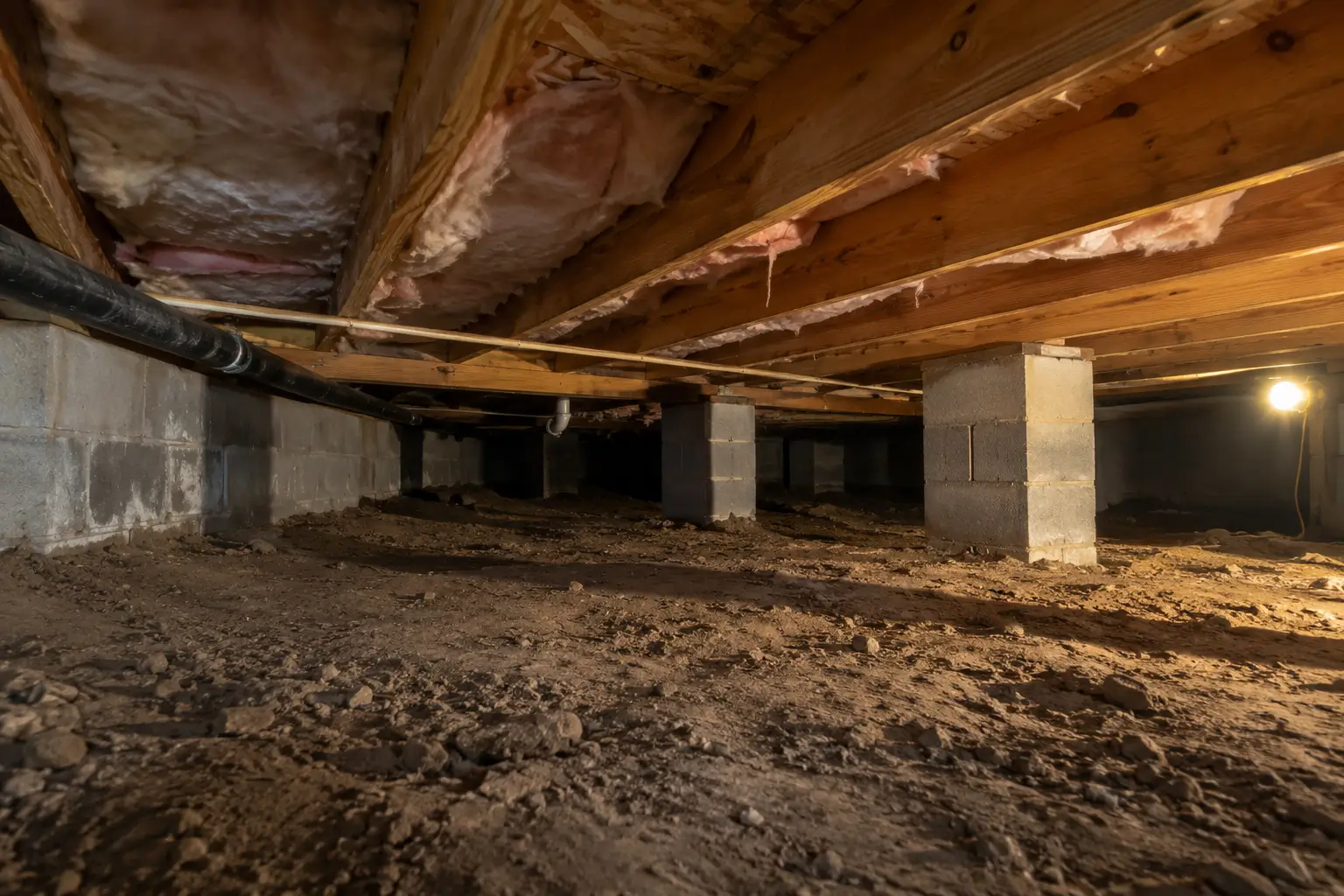
There is no slab to drill through. We seal the dirt floor with a heavy vapor barrier and pull air from underneath it. The same negative pressure, a different surface.
Radon moves through dirt far more easily than through poured concrete. An unsealed dirt crawl space is an open door for soil gas, and many of the older ranch-style homes around Lafayette have one.
Instead of core drilling through concrete, we cover the entire floor with heavy plastic sheeting, sealed to the foundation walls and fitted tightly around every pier post. That sheeting becomes the membrane, and a pipe pulls air from underneath it. If your home has a slab or a basement floor instead, that is a standard sub-slab radon mitigation system.
- The fan keeps radon in the soil It does not suck radon out of your home. It creates negative pressure below the plastic, so radon stays in the ground instead of rising through cracks and openings.
- You do not have to clear it out first Some contractors hand you a list of things to fix before they will work down there. We work around ductwork, sump pits and tight clearance, and sump pits stay accessible for future use.
A Vapor Barrier Alone Is Not Radon Mitigation
A vapor barrier by itself is half a system. Without a fan pulling air from underneath, radon just finds another way in.
A vapor barrier is plastic on the ground with the seams and edges sealed. On its own, it does not solve a radon problem. Radon still finds cracks in foundation walls, the rim joist, and holes cut for plumbing.
In older Lafayette homes it is not unusual to find a crawl space where a previous owner laid plastic down thinking that handled it. The plastic is there. The radon is still high. There is no fan and no suction.
A sub-membrane depressurization system is the complete version: the crawl space sealed tightly with plastic, a pipe connected from under that plastic to a fan, and the fan exhausting above the roofline. The vapor barrier is one part of that system, not the system itself. If you already have a full system and the numbers are climbing again, that is usually a worn out fan.
Ask the other guy where the fan goes. If a contractor is only offering to seal your crawl space, ask them where the fan and the pipe go. If there is not an answer, you are paying for half the job.
How We Install Crawl Space Radon Mitigation in Lafayette
Seal the floor, tape the seams, cut in the pipe, run it above the roofline, wire the fan.
- Seal the floor A heavy vapor barrier across the entire crawl space, taped sheet to sheet and sealed to the foundation walls and pier posts.
- Cut the inlet A fitting goes into the barrier where the pipe draws air from underneath.
- Run the pipe PVC routed from that fitting up through the rim joist or the exterior wall.
- Wire the power No outlet in the crawl space? We wire in a receptacle for the fan ourselves.
- Mount the fan In the pipe run, in the attic or outside. Never inside living space.
- Vent above the roof Tucked into a downspout where possible, so nothing is bolted to the front of the house.
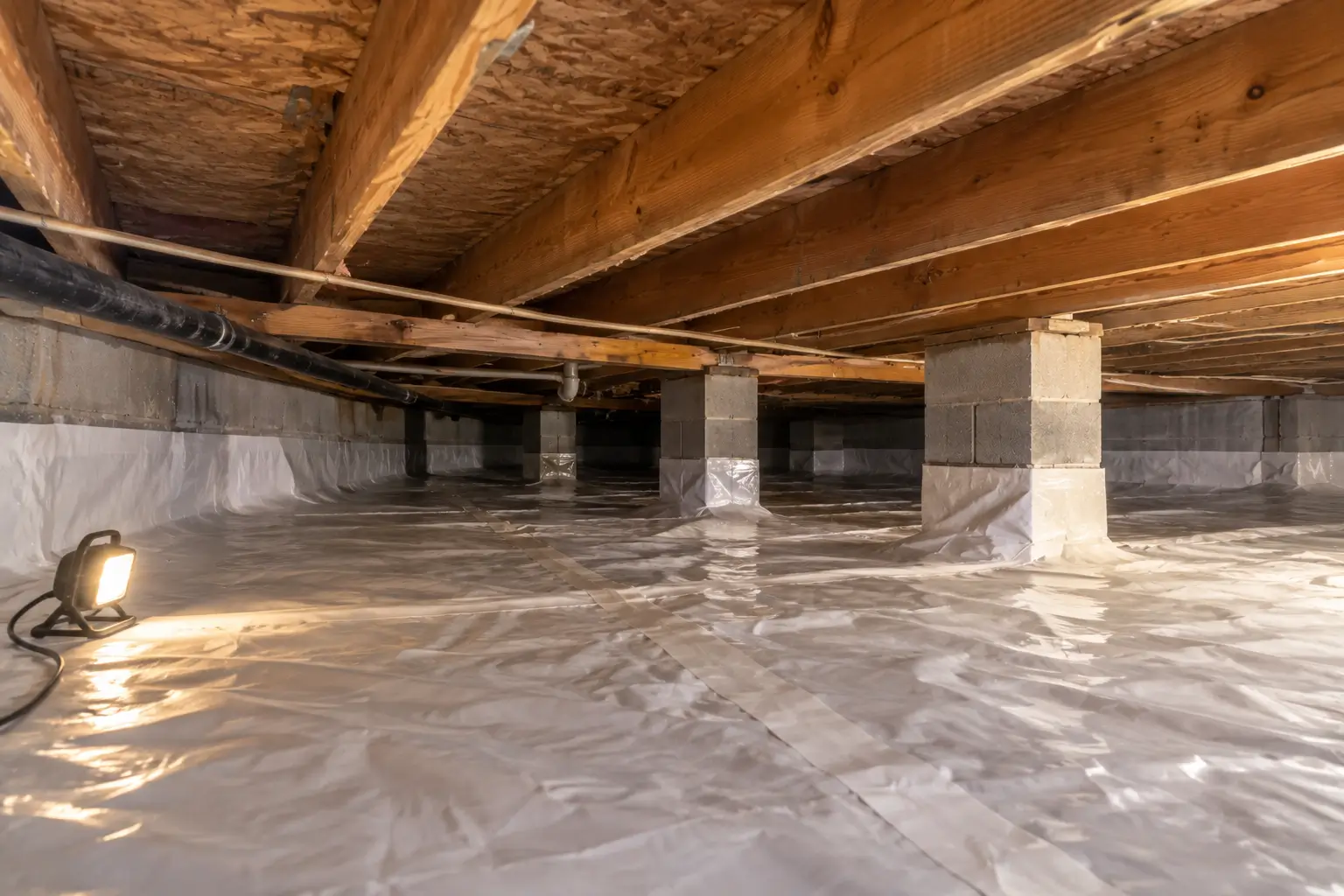
Older Lafayette crawl spaces tend to be tight, with openings that need sealing by hand where water lines and plumbing penetrate the subfloor. Finding and sealing those penetrations usually takes longer than running the pipe, and it is the part that determines whether the system actually holds pressure. On a slab, that sealing work happens at one core-drilled suction point instead.
The installation is start to finish. We do our own electrical and any modifications needed to keep the install neat. Our background is in general contracting, so nothing gets subcontracted out and nothing gets left for you to arrange.
Get Your Lafayette Crawl Space Priced
We come out, look at the crawl space, and give you one price before any work starts. It costs you nothing to find out.
Why We Quote Crawl Space Radon Mitigation On-Site
Crawl spaces are not priced like slabs. The size, the clearance, and the access all change the job. We look first, then give you one number.
- Square footage How much vapor barrier it takes to seal the whole floor.
- Power access Whether there is an outlet near the fan location or one has to be wired in.
- Pipe run How far the pipe has to travel to get outside and above the roofline.
- Mixed foundations One section over a crawl space and another on a slab changes the job.
Difficulty matters as much as size. A crawl space with 24 inches of clearance takes far longer to work in than one you can stand up in. Coming in through a tight hatch is different from a crawl space with walkout doors. If you are getting other quotes, ask how they price crawl space work specifically, not slab systems in general.
Crawl Space Radon Mitigation on a Closing Deadline
Radon shows up during the inspection period on a lot of Boulder County sales. If a closing depends on the system, say so when you call.
- Buyers You want a system installed as a condition of purchase, done properly and documented.
- Sellers You want it done right and done fast so the sale does not slip.
- Agents You want a date you can count on and one point of contact.
What usually delays a closing is not the installation. It is waiting too long to get the consultation on the calendar. Send us your closing date and we will work around it. Homeowners, realtors, and property managers all go through the same process here. No priority list, first come first served on the schedule.
Crawl Space Radon Mitigation Questions
-
Will just putting plastic down in my crawl space fix a radon problem?
No. A vapor barrier alone will not fix high radon. Plastic sheeting is only half the system. Without a fan pulling air from under the plastic, radon still finds cracks, rim joists, and plumbing holes to get into your home. In older Lafayette homes it is common to find plastic a previous owner laid down thinking it solved the issue, with radon still testing high. A real fix needs sealed plastic connected to a fan creating negative pressure underneath.
-
How is radon mitigation different for a crawl space than a basement with a slab?
Crawl space mitigation uses sealed plastic sheeting instead of drilling through concrete. Since there is no slab to core through, we install heavy plastic over the dirt floor, seal it to foundation walls and piers, and tape all seams. A pipe pulls air from underneath, creating the same negative pressure effect as a slab system. Radon moves through dirt more easily than concrete, so the sealing has to be tight around every post and penetration.
-
Why does my house have higher radon than my neighbor's basement home?
Crawl space homes often test higher because dirt floors let radon through more easily than poured concrete. Many older ranch-style homes in Lafayette have unfinished, unsealed crawl spaces that act like an open door for soil gas. It is common for a crawl space home to test higher than the identical house next door sitting on a full basement. Sealing and depressurizing the crawl space closes that gap.
-
Do I need to clear out my crawl space before you can install a system?
No. You do not need to move everything out first. We work around ductwork, sump pits, and tight clearance instead of handing you a list of repairs to do beforehand. Sump pits stay accessible for future use, and we handle sealing around pier posts and pipe penetrations ourselves. It is a start-to-finish installation, so you will not need to hire separate help before we arrive.
-
Does the fan sit inside my crawl space or living area?
No. The fan is never installed in living areas or inside the crawl space itself. It goes in the pipe run, typically in the attic or outside the home, with venting routed above the roofline. The fan does not suck radon from your air. It creates negative pressure under the vapor barrier so radon stays in the soil instead of rising into your home.
-
What should I ask a contractor before hiring them for crawl space radon work?
Ask where the fan and pipe will go, not just whether they will seal the plastic. If a contractor only offers to lay a vapor barrier with no fan or suction, you are paying for half the job. A proper system includes sealed sheeting, an inlet fitting, PVC pipe routed through the rim joist, and a fan providing constant suction under the membrane.
Crawl Space Radon Mitigation in Lafayette, CO
One of the owners picks up. Tell us about your crawl space and we will set up a time to come look.
Open seven days · 6:00 AM – 8:00 PM
Slab or basement instead? See standard radon mitigation or replace an existing fan.